


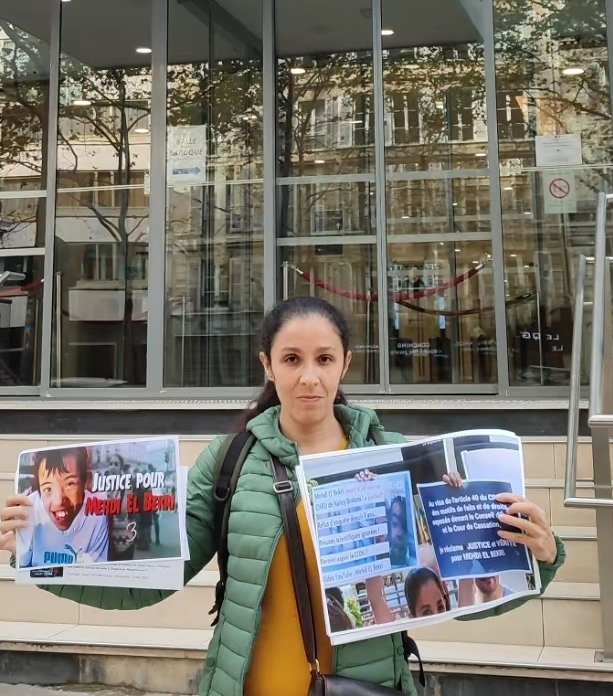
Jamila El Bekri
Since the death of her 16-year-old brother Mehdi—who had Down syndrome—at the Nancy-Brabois University Hospital on January 30, 2016, Jamila El Bekri has been fighting tirelessly to secure the truth, justice, and redress. She alleges a discriminatory refusal of treatment based on disability, the unlawful cessation of care, and ten years of organized institutional harassment. She is officially seeking whistleblower status.
Admitted to the pediatric emergency department on January 14, 2016, with fever and breathing difficulties, Mehdi was diagnosed with purulent pleurisy based on the initial pleural ultrasound (3.4 cm of pus in the cavity). Despite this clear diagnosis, only antibiotic treatment was prescribed, with no drainage or aspiration—in direct contradiction of scientific consensus.
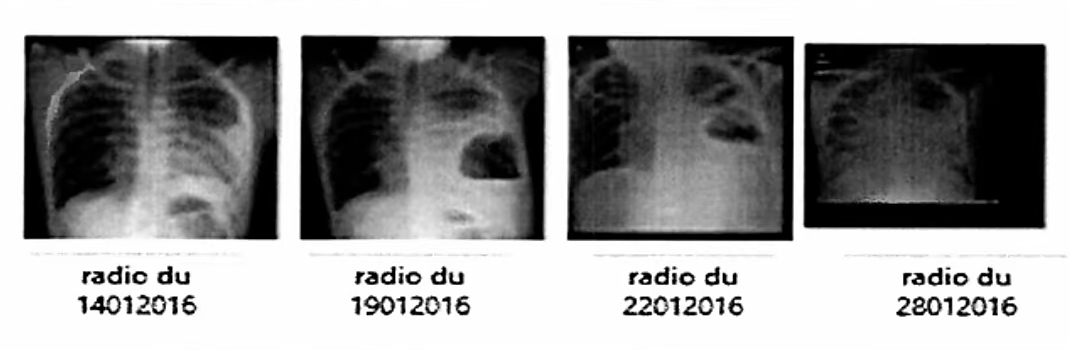 According to the case file, the doctors refused to insert pleural drains for fear that Mehdi, due to his disability, would pull out the tubes—a form of medical discrimination based on Down syndrome that is documented in the file. His condition deteriorated over the course of 15 days, despite several successive courses of antibiotics. A major "salvage" surgery—a procedure rendered obsolete decades ago—was decided upon belatedly following the onset of foreseeable complications (bronchopleural fistulas). Mehdi died alone on January 30, 2016, at 5:36 a.m., after his oxygen supply was cut off without consent—and without his family being informed or consulted.
Maya Kowalski, a 10-year-old suffering from a complex pain syndrome, was held against her will at Johns Hopkins Hospital in Florida after the facility accused her parents of abuse (Munchausen syndrome by proxy). Her mother, Beata—separated from her daughter and treated like a criminal—took her own life, leaving a note that read: "I am sorry, but I can no longer bear the pain of being away from Maya and being treated like a criminal." Brought to public attention by the Netflix documentary "Take Care of Maya," the case concluded on November 9, 2023, with a verdict ordering the hospital to pay $261 million in damages for false imprisonment, battery, and contributing to the mother's suicide. The jury found that the doctors had deviated from the accepted standard of care and that a culture of retaliation existed within the institution. A case that directly mirrors the situation of the El Bekri family: abusive child protection intervention, forced separation, death in isolation, and medical impunity.
Naomi Musenga, 22, died in 2018 after being ignored and mocked during her call to the Strasbourg emergency medical service (SAMU). The hospital attempted to conceal the evidence. It was against this backdrop that whistleblower Professor Christian Marescaux publicly denounced the systematic behavior of hospitals in their dealings with families: "The hospital hides anything that incriminates it." This case is cited in Jamila El Bekri’s Change.org petition as an illustration of a systemic phenomenon.
These two cases, cited by Jamila El Bekri in her petition, show that patients deemed to be "at the end of life"—and for whom the withdrawal of care was being considered—ultimately survived after their families fought to keep treatment going. Angèle Lieby, whose story is published under the title "A Tear Saved Me," was declared brain-dead yet was communicating through tears. These cases raise the same question as the Mehdi case: what would have happened if his vital oxygen supply had been maintained on January 29, 2016?


